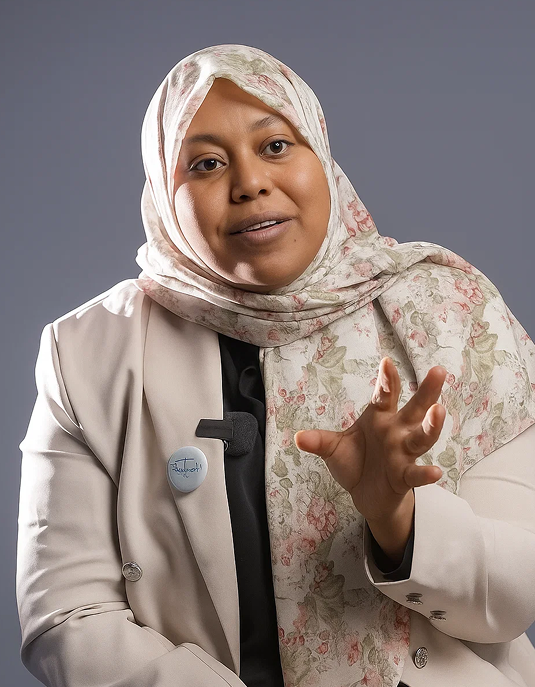
In a small workshop in Ubari, spools of thread line the walls and the hum of sewing machines fills the air. This is where Jameela Bashir has slowly stitched together a livelihood for herself, her family, and the women she works with.
Jameela's journey began with a simple need. When her children were young, she struggled to find affordable, high-quality clothing in the local markets. Rather than accept the situation, she decided to act. She borrowed a basic sewing machine, watched online tutorials late into the night, and started experimenting with patterns on fabric she could find.
As friends and neighbours began to notice the care she put into every stitch, requests for custom pieces followed. What started as a side activity to support her family slowly transformed into a vision: to build a local brand that reflects the dignity, colour, and creativity of southern Libya.
From home workshop to registered business
Like many women-led initiatives in smaller cities, Jameela's early steps were informal. She worked from home, managing orders through messaging apps and word of mouth. Without access to tailored business training or finance, it was difficult to grow beyond a few loyal customers.
Through Tatweer's entrepreneurship support, Jameela was introduced to mentoring, coaching, and a community of other founders facing similar challenges. Together, they explored topics such as pricing, branding, digital marketing, and how to formalise a business while staying true to its social mission.
"For the first time, I started thinking of my work as more than just sewing," she recalls. "I began to see it as a business that could create jobs for other women in my city."
Creating dignified work for women in Ubari
Today, Jameela doesn't work alone. Her workshop brings together a small team of women who cut, sew, finish, and package each item by hand. Many of them are primary breadwinners for their households. The business offers flexible hours so they can balance family responsibilities while contributing to the local economy.
The impact goes beyond income. By building a safe, collaborative workplace, Jameela has created a space where women can share ideas, learn new skills, and support one another. Each order helps sustain that environment.
Looking ahead: scaling without losing the details
Jameela's next goal is to upgrade her equipment, streamline production, and reach new customers online while preserving what makes her brand unique: carefully crafted pieces made in Ubari, by women who know their community. With continued coaching and access to markets, she hopes to open a dedicated storefront and train the next generation of young women in modern tailoring techniques.
Her story is one of thousands across Libya—a reminder that when local entrepreneurs receive the right support at the right moment, they don't just grow businesses. They weave new possibilities for their cities, one stitch at a time.